Hello! Welcome to the official website of MAOTAI TOWN HUACHENG WINE GROUP !


 Chinese
 English
 Russian

In ancient Maotai Town, the aroma is said to waft for ten miles.
In ancient Maotai Town, the aroma is said to waft for ten miles.
2020-11-22
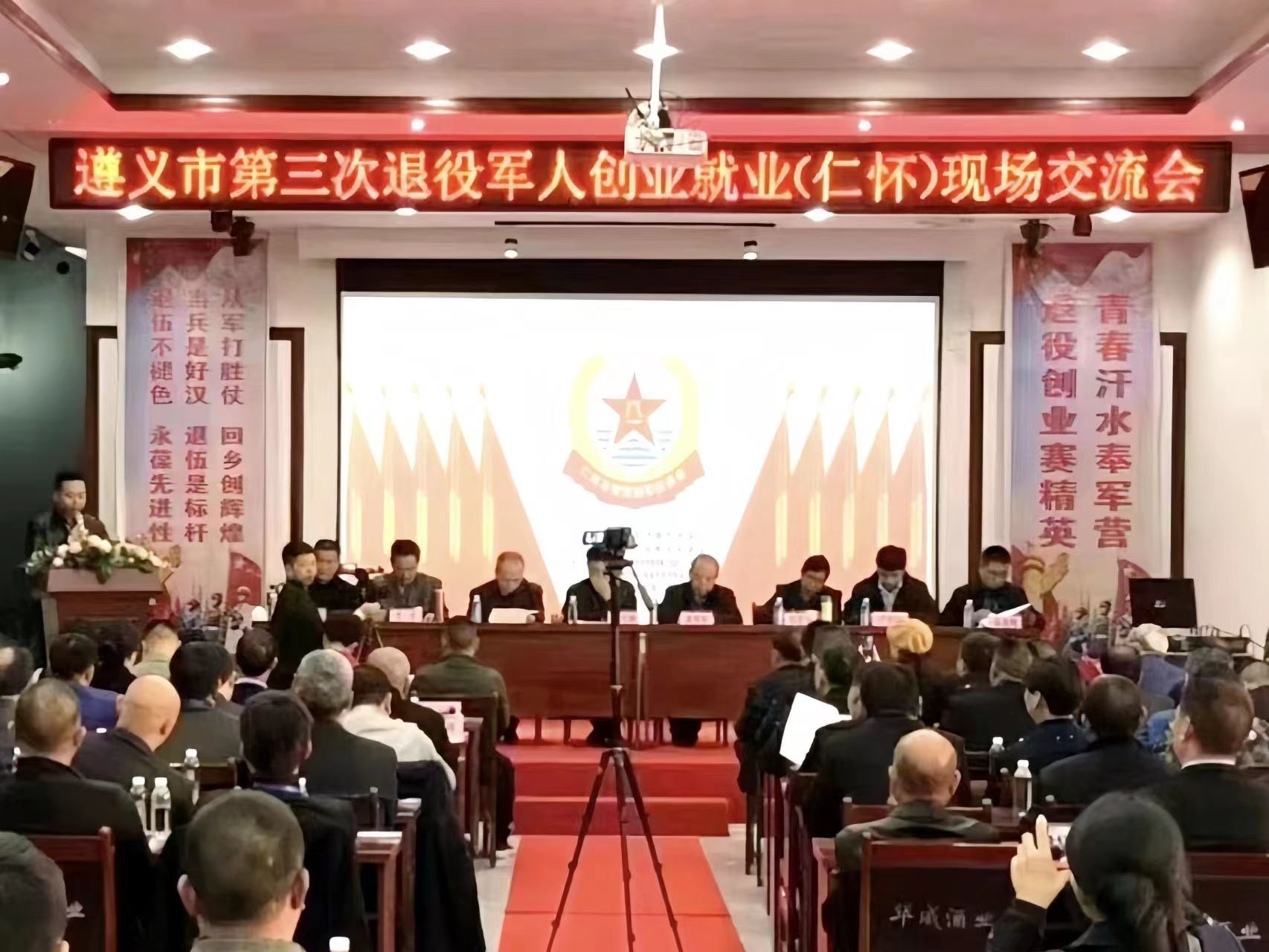
The 3rd Zunyi Veterans Entrepreneurship and Employment Exchange Conference was held at our company.
Addressing the employment issues of veterans is a task that the state attaches great importance to. On the afternoon of November 13, 2020, the 3rd Zunyi Veterans Entrepreneurship and Employment Exchange Conference, hosted by Huacheng Liquor Industry (Group), brought together efforts and pooled wisdom to promote high-quality development of veteran affairs in the new era.

2023-10-28
Huacheng Winery was invited to attend Baoji’s first Wine Expo.
From October 26 to 28, 2023, the China (Baoji) International Wine Industry Expo, hosted by the China Chamber of International Commerce and organized by the Baoji Municipal Council for the Promotion of International Trade, was held at the Baoji International Convention and Exhibition Center. This year’s expo was themed “Silk Road Fine Wines—A World of Rich Aromas,” and attracted trade representatives from countries along the Belt and Road, representatives from major wine importers, and leading distributors to participate in this industry event. The expo brought together over 200 renowned domestic and international wine companies, including Xifeng Liquor, Moutai, Wuliangye, Luzhou Laojiao, and Jiannanchun. Huacheng Winery was invited to exhibit at the event. At the venue, participants engaged in extensive discussions on wine industry cooperation and development through various activities such as product exhibitions, thematic forums, business negotiations, and project promotions.

2023-11-21
Sauce-flavored liquor—a cultural product that embodies the wisdom of our ancestors.
During the era of Yu the Great, the indigenous people living along the Chishui River—the Puyi (Puo) tribe—were skilled at harnessing the waters of the Chishui River. In their naturally favorable brewing environment, they transformed surplus grains into a distinctive and exquisite wine. By 135 B.C., the locally brewed wine had already gained some renown. In Sima Qian’s “Records of the Grand Historian,” it is recorded that when Tang Meng was sent as an envoy to Nanyue, he brought with him the jujube sauce wine produced in Nanyue (today’s Renhuai County, where Maotai Town is located) to Emperor Wu of Han, who praised it as “sweet and delicious.” During the Tang and Song dynasties, the winemaking techniques around Maotai Town along the Chishui River continued to advance. The “Daqu liquor,” made by fermenting grains through the use of specially prepared qu, became markedly superior to wines from other regions. It began to serve as tribute wine for successive dynasties and, via the Southern Silk Road, spread overseas.

2023-10-24
Frost Descent | Warmth and togetherness, sharing exquisite wine together.
“Frost” is a sign of cold weather and large temperature fluctuations between day and night; hence, this solar term—marked by a sudden drop in temperature and significant day-night temperature differences—is named “Frost Descent.” At this time, the autumnal atmosphere is waning, and the onset of winter is imminent. People who are not deeply versed in these matters are already beginning to gather at home. Du Mu once wrote: It's rare in this world to find someone who laughs openly. “Chrysanthemums must be arranged to adorn one’s head.” People cast aside the worries of the mundane world, gather around together to savor persimmons, enjoy crabs, and admire chrysanthemums, sharing in the joy of a bountiful harvest.

2023-10-27
The 12987 process for brewing soy sauce wine at Chongyang Xiasha has just begun.
The brewing process of sauce-aroma liquor is the most complex among all aroma types. From grain selection to product release, it takes at least three years, during which the liquor undergoes six key stages: making qu, fermentation, distillation, aging, blending, and bottling. Sauce-aroma liquor has the longest brewing cycle and the lowest yield, yet it boasts the highest quality. This method of sauce-aroma liquor production has been refined over generations by brewers who adhere strictly to natural laws. The sauce-aroma liquor... Production process Therefore, it has been included in the “China National-Level” list. Intangible Cultural Heritage ”, hailed as “ Chinese baijiu Process of Living fossil ”。

2023-11-21
“What does ‘100-yuan sauce-free liquor’ signal to consumers?”
I don’t know how much pure-grain-brewed baijiu there is, but I do know how “little” pure-grain-brewed sauce-aroma liquor there is! By understanding the ingredients used to make sauce-style liquor, you’ll realize why pure-grain brewed sauce-style liquor is becoming increasingly rare—and that’s precisely why there’s a saying: “There’s no sauce-style liquor under 100 yuan.”

2023-10-23
The “Capital of Sauce-Aroma Liquor”—Moutai Town’s Chongyang Festival Water Sacrifice Ceremony
The Double Ninth Festival is a traditional folk festival in China. In ancient times, people would climb high places to pray for blessings and honor gods and ancestors during the Double Ninth Festival. This custom has been passed down through the ages and has since been enriched with new meanings, such as respecting and showing gratitude toward the elderly.

2023-05-10
Introduction to the advantages of Jiangfu Liquor’s sauce-aroma style
Jiangfu Liquor is a time-honored baijiu renowned worldwide for its distinctive sauce-aroma style. This sauce-aroma liquor boasts the following advantages: Sauce Father Liquor, Sauce-Aroma Style It has a unique flavor that is truly impressive.

2023-09-25
Recently, the topic of sauce-aroma liquor culture has once again drawn public attention. As a quintessential representation of China’s traditional liquor culture, sauce-aroma liquor has long been imbued with rich history and unique brewing techniques.

2023-05-16
The History and Culture of Guizhou Jiangfu Liquor
Guizhou Jiangfu Liquor is a type of Chinese baijiu renowned for its mellow, smooth texture and rich, robust flavor. It is said that the name—combining "Jiangzu" (the ancestor of soy sauce) and "Fuzu" (the ancestor of liquor)—is intended to convey the idea of "passing down through generations." Guizhou Jiangfu Liquor is not only widely popular in China but has also been exported to numerous countries and regions around the world. This popularity stems not only from its unique taste and intense flavor but also from the fact that it embodies Chinese culture and tradition. The production process of Jiangfu Liquor can be divided into five stages: First, select ingredients such as peas and rice. Next, soak these ingredients in water and then steam them; after mixing the ingredients, add yeast starter and malt paste. This step helps to enhance the richness and depth of flavor in Jiangfu Liquor. Then comes fermentation: The prepared ingredients are placed in a fermentation chamber, and the duration of fermentation must be adjusted according to the season and temperature. After fermentation, the liquor is filtered using a filter. This process removes suspended particles and other impurities while preserving the liquor’s nutritional components. Finally, the filtered liquor is stored in earthenware jars or wooden barrels, where it continues to ferment and mature over time. Jiangfu Liquor is not merely a culinary delight—it is also a symbol of Chinese culture. In Chinese culture, alcohol plays an essential role. Throughout Chinese history, there are countless legends and stories about liquor, and it holds an irreplaceable place in cultural and social activities. Guizhou Jiangfu Liquor does not...
Contact Us

Fax: 0852-22289699
Address: Chunsu Village, Maotai Town, Renhuai City, Guizhou Province

Scan with WeChat
Visit Huacheng Mall
Copyright © MAOTAI TOWN HUACHENG WINE GROUP 2025 (mthcjy.com) All Rights Reserved. Website Development: China Enterprise Dynamics Guiyang